November 10, 2026
Architectural design relies on balancing reliable structural protection with refined aesthetic appeal. Staircases serve as functional arteries within buildings, directing movement across levels while anchoring the visual flow. Installing a well-crafted metal stair railing transforms these circulation paths into commanding focal points. Custom metalwork introduces clean geometry, crisp lines, and dependable physical support, ensuring multi-level transitions remain secure under steady foot traffic. Property owners and builders seek structural features that harmonize with modern, coastal, or traditional architecture without compromising occupant safety.
Selecting suitable materials requires thoughtful evaluation of environmental conditions, structural demands, and decorative styles. Metal alloys provide unmatched versatility, permitting profiles ranging from minimalist pickets to elaborate decorative panels. Coastal settings, commercial entries, and residential interiors present distinct challenges that custom fabrication addresses through tailored alloy selection and specialized joinery. Thoughtful fabrication elevates everyday circulation routes, establishing long-term stability while complementing exterior accents like Bahama shutters, structural louvers, and open walkways.
Choose Aluminum and Coatings
Aluminum remains a top choice for residential and commercial spaces due to its strength-to-weight ratio and natural corrosion resistance. Unlike ferrous alloys that require constant shielding against rust, aluminum forms an oxide layer that resists atmospheric degradation. This characteristic makes it suitable for humid coastal regions and exposed exterior decks. Extruded aluminum frames allow for precise TIG welding, creating uniform joints that endure heavy mechanical loads while maintaining clean visual lines. The metal adapts to diverse configurations, serving along exterior staircases, balcony perimeters, and walkways without placing excessive weight on building frameworks.
Advanced powder-coat finishes enhance the resilience of aluminum, providing rich color retention and guarding against surface scratching, chalking, and salt spray. Owners can match architectural trim with black, bronze, white, or custom hues that blend with exterior facades. Elevated platforms and outdoor steps demand dependable protective barriers. According to This Old House, regional building codes frequently mandate safety barriers when walking platforms sit 30 inches or higher above ground level. Erecting an aluminum metal stair railing satisfies these protective requirements, delivering reliable physical security alongside refined architectural appeal.
Forge Iron and Accents
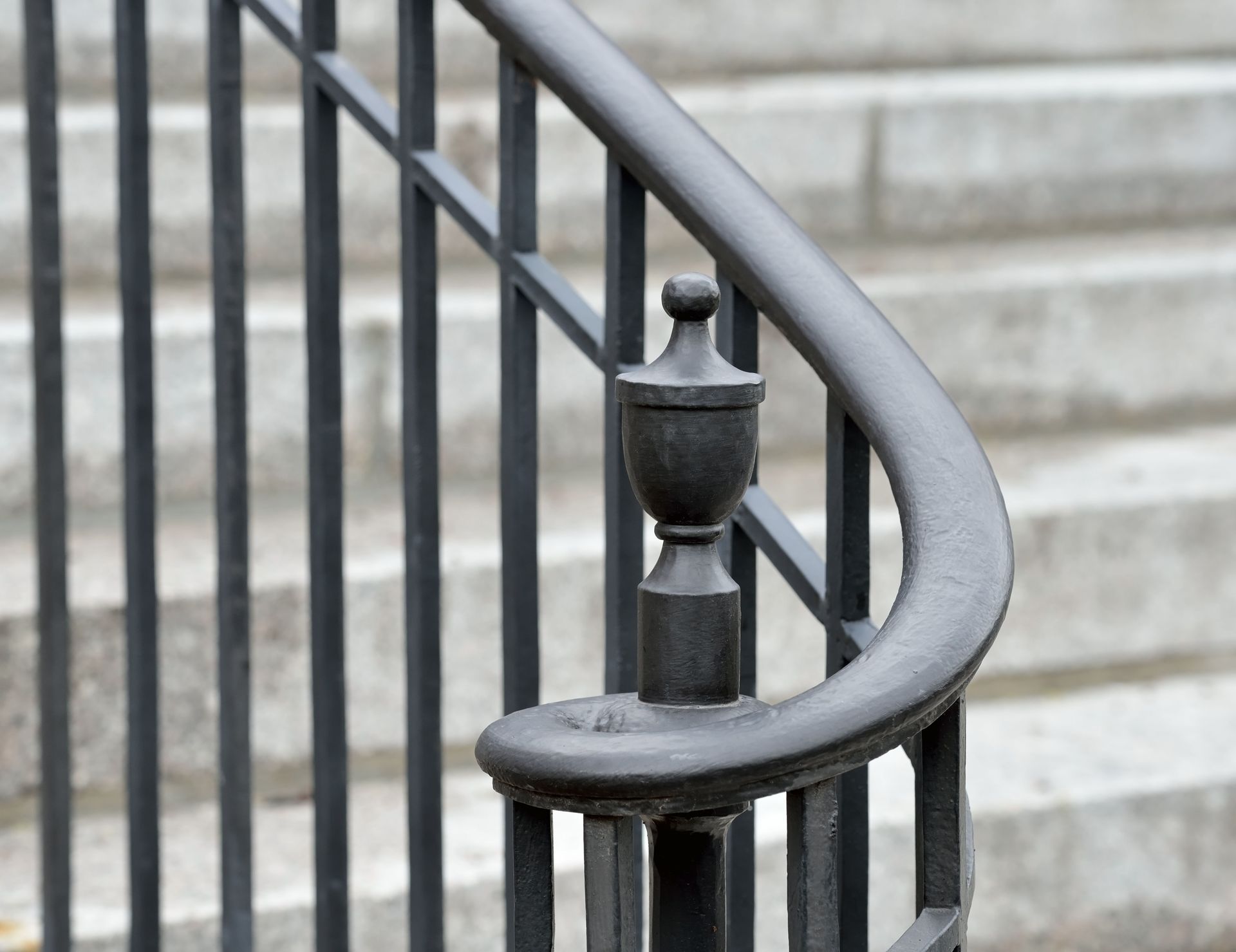
Wrought iron delivers classic architectural presence and structural mass that anchors traditional spaces. Skilled artisans bend, forge, and shape iron components into distinct profiles, producing custom assemblies that convey permanent presence. Hand-shaped balusters, scrolling details, and solid top rails provide tactile substance that mass-produced substitutes cannot replicate. The tensile strength of forged iron enables slender posts to support significant lateral force, making it an enduring solution for residential staircases, grand halls, and historic restoration projects.
Traditional interiors benefit from the dark tones and substantial textures of hand-wrought metalwork. Iron structures pair naturally with hardwood treads, paneled wainscoting, and polished stone landings, establishing a unified interior composition. Specifying a wrought iron metal stair railing introduces historic sophistication to multi-story foyers, framing steps with timeless decorative motifs. Protective coatings shield the metal from ambient moisture, allowing property owners to incorporate classic artisan metalwork into prominent entryways while preserving structural integrity through years of daily use.
Mount Steel and Glass
Stainless steel delivers a crisp, contemporary aesthetic characterized by high tensile capacity and polished surfaces. The alloy contains chromium, which prevents surface oxidation, making it suitable for interior lofts and exterior installations. Fabricators utilize brushed satin or mirror-polished finishes to create distinct architectural moods that accentuate geometric simplicity. Stainless steel frameworks integrate with modern building materials like poured concrete, exposed brick, and large-format porcelain tile, emphasizing architectural purity and structural discipline.
Pairing stainless steel posts with tempered glass infill panels creates transparent boundaries that foster visual continuity across open floor plans. The clear panels allow daylight to travel unobstructed through corridors and stair towers, making compact spaces feel expansive and bright. Incorporating a stainless steel metal stair railing with glass inserts maintains scenic sightlines on exterior terraces and interior mezzanine landings. Precision clamping hardware and welded stainless posts keep the glass panels stable under daily occupancy, merging unobstructed visibility with steadfast physical protection.
Secure Cables and Hardware
Horizontal and vertical cable systems provide an airy profile that maximizes transparency while maintaining continuous fall protection. Marine-grade stainless steel cables stretch between rigid terminal posts, creating slender barrier lines that recede into the surrounding background. This minimalist design preserves panoramic vistas, waterfront scenery, and open interior layouts. Cable assemblies adapt to residential balconies, elevated commercial decks, and open-riser staircases, offering a low-profile alternative to solid balustrades while meeting rigid deflection standards under load.
Tensioned cable runs require robust end posts capable of bearing static tension without bowing out of plumb. Specialized swageless fittings, turnbuckles, and concealed tensioners secure each cable strand within aluminum or stainless structural posts. Choosing a tensioned cable metal stair railing creates clean horizontal perspective lines that guide the eye upward through a multi-story atrium or outdoor terrace. The system allows sea breezes and natural light to flow across outdoor decks, resisting environmental wear when paired with corrosion-resistant framing materials.
Craft Metalwork and Motifs
Ornamental metalwork transforms standard barrier rails into bespoke architectural expressions by combining artistic metal craftsmanship with precise structural design. Designers incorporate decorative laser-cut panels, geometric latticework, fluid botanical patterns, or historic scroll accents to create distinctive visual interest. These infill designs establish unique identity within custom residences, boutique properties, and corporate offices. Rather than settling for off-the-shelf components, property owners collaborate with custom metal fabricators to engineer patterns that echo surrounding architectural trim, exterior window mullions, or custom gate accents.
Bespoke ornamental panels provide functional safety while serving as signature centerpieces along focal stairways and mezzanine perimeters. Custom-crafted motifs can reflect regional architectural styles, such as Mediterranean revival patterns or crisp geometry, enhancing the visual cohesion of the surrounding building. A decorative metal stair railing designed with custom ornamental infill delivers tailored personality to grand entries, pairing robust perimeter framing with delicate interior metal artistry. Precision welding ensures each decorative insert remains secure and rattle-free under prolonged daily use.
Integrate Engineering and Layouts
Flawless metal installations require technical planning, structural drafting, and spatial coordination prior to manufacturing. Professional CAD modeling allows engineers to map exact riser heights, tread depths, and turning radiuses, eliminating fitment errors before metal cutting begins. This engineering foresight proves essential when constructing complex assemblies such as space-saving spiral staircases, multi-landing aluminum stairs, or exterior access systems designed for harsh coastal winds. Detailed blueprints confirm that structural anchors align with building joists, concrete slabs, and wall framing to ensure long-term stability.
Precision fabrication techniques bring digital concepts into reality through meticulous shop assembly and controlled TIG welding. TIG welding produces clean, high-strength joints free from spatter, generating smooth handrail transitions that feel comfortable under palm pressure. Specifying an engineered metal stair railing ensures that every post, mounting bracket, and cap rail aligns with local structural codes while reflecting architectural intentions. Seamless integration between engineering and hands-on metal fabrication guarantees durable structures that withstand environmental exposure and heavy commercial occupancy.
Selecting a suitable railing system shapes the safety, functionality, and aesthetic character of any multi-level space. Metal systems provide architectural durability and timeless style across residential, commercial, and coastal properties. Whether highlighting the versatility of aluminum, the historic strength of iron, the clean transparency of stainless steel, or the open sightlines of cables, custom metal elements adapt to varied design visions.
Investing in custom fabrication and precise engineering guarantees that structural metalwork complies with regional building codes and endures relentless environmental wear. Incorporating a well-designed metal stair railing into your building project unifies architectural details, providing occupants with reassuring stability and visual refinement. Every staircase deserves meticulous planning, clean welding, and robust materials suited to its structural demands. Reach out to our team at Steel Heart Fabrication to bring your architectural metal vision to life.